Archives January 2025

What is the Difference between Sia Door Supervisor And Security Guard

The Basics Of Sia Door Supervisor And Security Guard Roles

The Basics of SIA Door Supervisor and Security Guard Roles

Regarding ensuring the safety and security of people and premises, two key roles often come to mind: SIA Door Supervisors and Security Guards. Although these roles may seem similar, they have distinct differences in terms of their responsibilities and the environments they operate in.

Key Responsibilities Of Sia Door Supervisors

SIA Door Supervisors play a crucial role in maintaining safety and order in licensed premises such as bars, clubs, and events. Their main responsibilities include:

  1. Checking and verifying the identification of individuals entering the premises to prevent underage drinking or entry.
  2. Maintaining a visible presence to deter anti-social behavior and potential security threats.
  3. Handling challenging situations, including conflict resolution and managing crowd control.
  4. Ensuring compliance with licensing laws, regulations, and venue policies.
  5. Monitoring CCTV systems to identify and respond to any suspicious activities.

Key Responsibilities Of Security Guards

Security Guards, on the other hand, are responsible for protecting property, assets, and people in a wide range of settings, including residential areas, office buildings, and retail establishments. Their primary responsibilities include:

  1. Conduct regular patrols to detect and prevent unauthorized access or potential security breaches.
  2. Responding to alarms and emergencies promptly, assessing situations, and taking appropriate action.
  3. Controlling access to premises by monitoring visitors, employees, and vehicles.
  4. Performing security checks, such as bag inspections, to prevent theft or vandalism.
  5. Providing a visible presence to deter criminal activity and ensure a safe environment.

In conclusion, while both SIA Door Supervisors and Security Guards play vital roles in maintaining safety and security, their specific responsibilities vary based on the environments they operate. SIA Door Supervisors focus on maintaining order in licensed premises, while Security Guards protect property and assets in various settings.


Licensing Requirements For Sia Door Supervisors Vs. Security Guards

Understanding the difference between SIA Door Supervisors and Security Guards is crucial for businesses looking to hire the right personnel for their security needs. One of the most significant distinctions lies in the licensing requirements for these roles. Let’s delve into the qualifications needed for SIA Door Supervisors and Security Guards.

Qualifications Needed For Sia Door Supervisor

SIA Door Supervisors are required to hold a valid SIA license to legally operate in their role. To obtain this license, individuals must complete a recognized training course, such as the Level 2 Award for Door Supervisors. This comprehensive training covers a wide range of topics including conflict management, physical intervention, and licensing law.

Qualifications Needed For Security Guard

Security Guards also need to obtain an SIA license to work legally. The specific training required for this role is the Level 2 Award for Security Guards. This training encompasses essential skills such as patrolling, report writing, and emergency procedures, preparing individuals to handle various security challenges effectively.

Work Environments: Where You’ll Find Sia Door Supervisors And Security Guards

SIA Door Supervisors and Security Guards may work in various environments, including bars, clubs, concerts, festivals, shopping malls, and public buildings. The main difference between them is that Door Supervisors are responsible for controlling access to venues and handling conflict situations, while Security Guards focus on protecting people and property.

SIA door supervisors and security guards are two types of security professionals who play different roles and work in different environments. While both are responsible for maintaining safety and security, there are some notable differences between them in terms of their job functions and work environments.


Typical Venues For Sia Door Supervisors

SIA door supervisors are typically found in licensed premises such as bars, nightclubs, and pubs. They are responsible for ensuring the safety and security of the patrons and staff in these venues. Door supervisors have the authority to refuse entry to anyone who appears to be under the influence of drugs or alcohol, as well as to remove anyone who is causing trouble or posing a threat to others. Aside from licensed premises, SIA door supervisors can also be found at events such as concerts, festivals, and sporting events. They are responsible for crowd management and ensuring that everyone in attendance stays safe.

Common Workplaces For Security Guards

Security guards are typically found in a variety of settings, including retail stores, office buildings, and industrial facilities. They are responsible for monitoring the premises to prevent theft, vandalism, and other criminal activities. In retail stores, security guards are responsible for preventing shoplifting and ensuring the safety of customers and staff. In office buildings, they are responsible for controlling access to the building and ensuring that only authorized personnel are allowed in. In industrial facilities, security guards are responsible for monitoring the premises to prevent theft and ensure the safety of employees. In conclusion, while both SIA door supervisors and security guards are responsible for maintaining safety and security, they work in different environments and have different job functions. SIA door supervisors are typically found in licensed premises and events, while security guards are commonly found in retail stores, office buildings, and industrial facilities.

Skills And Attributes: What Sets Them Apart

When it comes to security personnel, two common roles that often come up are SIA Door Supervisors and Security Guards. While both positions are crucial in maintaining safety and security, there are distinct differences in the skills and attributes required for each role. Understanding these differences can help individuals and businesses make informed decisions when it comes to hiring the right security professionals for their specific needs.

Unique Skills Of Sia Door Supervisors

SIA Door Supervisors possess a unique set of skills that make them well-suited for specific security tasks. These professionals are typically responsible for controlling access to premises, such as nightclubs, bars, and events, ensuring the safety of both staff and patrons. Some of the key skills that set SIA Door Supervisors apart include:

  • Conflict Resolution: Door Supervisors are trained in conflict management techniques, enabling them to handle difficult situations with tact and diplomacy.
  • Physical Intervention: In situations where physical intervention is required, Door Supervisors are trained to use minimal force and restraint techniques to ensure the safety of all parties involved.
  • Customer Service: Providing excellent customer service is an essential skill for Door Supervisors as they interact directly with the public, ensuring a positive and welcoming environment.
  • Knowledge of Licensing Laws: Door Supervisors are well-versed in the laws and regulations surrounding licensed premises, enabling them to enforce compliance and maintain a safe and lawful environment.

Essential Attributes Of Security Guards

Security Guards, on the other hand, are responsible for safeguarding a wide range of premises, including residential buildings, retail stores, and office complexes. While their roles may vary depending on the specific assignment, there are several essential attributes that all Security Guards should possess:

  • Vigilance: Security Guards must remain alert at all times, constantly scanning their surroundings for any signs of suspicious activity or potential threats.
  • Observation Skills: Being able to quickly and accurately assess a situation is crucial for Security Guards, allowing them to respond appropriately and take necessary action.
  • Emergency Response: Security Guards should be well-trained in emergency response procedures, including evacuation protocols and first aid, ensuring they can effectively handle any unforeseen situations.
  • Report Writing: Maintaining detailed and accurate records of incidents and activities is a vital responsibility of Security Guards, requiring strong written communication skills.

While there may be some overlap in certain skills and attributes, understanding the distinct qualities that set SIA Door Supervisors and Security Guards apart can help businesses and individuals make informed decisions when it comes to hiring the right security professionals for their specific needs.


The Legal Powers And Limitations

Powers Granted To Sia Door Supervisors

SIA Door Supervisors can detain individuals and use reasonable force if necessary.

  • Authorized to remove disruptive individuals from premises.
  • Allowed to check IDs and refuse entry based on legal criteria.

Legal Boundaries For Security Guards

Security Guards cannot detain individuals or use force except in self-defense.

  1. Required to observe and report suspicious activities.
  2. Restricted from engaging in physical confrontations.

Salary And Career Progression

In the security industry, a SIA Door Supervisor typically has more authority and responsibilities compared to a Security Guard. Door Supervisors often handle crowd control and conflict resolution, while Security Guards focus on monitoring and protecting property. This difference can impact salary and career progression opportunities for individuals in these roles.

Earning Potential For Sia Door Supervisors

SIA Door Supervisors and Security Guards are two different job roles in the security industry. While they both require an SIA license, their roles and responsibilities differ significantly. Salary and career progression are two important factors that can influence an individual’s decision to choose one over the other. When it comes to the earning potential of SIA Door Supervisors, the average salary in the UK is around £10-12 per hour. This can vary depending on factors such as location, type of venue, and experience. However, some Door Supervisors can earn up to £15 per hour or more, especially if they work in high-end venues or events. The job also offers the opportunity to earn tips, which can significantly boost earnings.

How Many Hours Can a Security Guard Work in a Day

Career Pathways For Security Guards

Security guards, on the other hand, have a different career progression. While some may choose to stay in the role for an extended period, others may use it as a stepping stone to other security-related roles. The career path for security guards can include becoming a security supervisor, a security manager, or even a security consultant. For those who wish to climb the career ladder, additional qualifications and training may be required. This can include courses such as CCTV operation, conflict management, and first aid. Having these additional qualifications can significantly increase earning potential and open up more opportunities for career progression. In conclusion, while both SIA Door Supervisors and Security Guards require an SIA license, they have different earning potentials and career pathways. SIA Door Supervisors can earn a higher hourly rate and may have the opportunity to earn tips. Security Guards, on the other hand, have more diverse career progression opportunities. Ultimately, the decision between the two roles depends on an individual’s personal preferences and career goals.

Training And Continuous Professional Development

Training and continuous professional development are essential aspects of the roles of both SIA door supervisors and security guards. Ongoing training not only enhances their skill sets but also ensures they stay updated with the latest industry standards and regulations.

Upgrading Skills As A Sia Door Supervisor

As an SIA door supervisor, continuous professional development is crucial. Door supervisors are required to undergo regular training to upgrade their skills, including conflict management, physical intervention, and customer service. This training equips them to effectively handle various security challenges and maintain a safe environment for patrons.

Ongoing Training For Security Guards

Security guards also undergo ongoing training to enhance their capabilities. This includes familiarizing themselves with the latest security technologies, emergency response procedures, and public interaction skills. Continuous training ensures that security guards remain vigilant and prepared to address potential security threats effectively.

Choosing The Right Path For You

Assessing Your Fit For An Sia Door Supervisor Role

Before pursuing a career as an SIA door supervisor, consider if you possess the necessary qualities. This role requires strong communication skills, the ability to remain calm under pressure, and the capacity to handle difficult situations with tact and professionalism. Furthermore, physical fitness and the capability to work during evening and weekend hours are essential for this position. If you believe you possess these attributes, then an SIA door supervisor role may be the right fit for you.

Evaluating Your Suitability As A Security Guard

For those considering a career as a security guard, certain characteristics are essential. This role demands a keen eye for detail, the ability to follow procedures and protocols diligently, and a strong sense of responsibility. Physical fitness and the capability to work in various environments and weather conditions are also critical. If you believe you possess these traits, then pursuing a career as a security guard may align with your strengths and interests.


Frequently Asked Questions

Is the Door Supervisor the Same As the Security Guard?

No, a door supervisor is not the same as a security guard. A door supervisor specifically monitors entrances and exits, while a security guard provides overall security services.

What Is The Difference Between A Security Guard And A Security Supervisor?

A security guard is responsible for the safety and security of a particular area, while a security supervisor oversees and manages a team of security guards. The supervisor is responsible for training, scheduling, and ensuring that the guards are following security protocols.

What Do Sia Door Supervisors Do?

SIA door supervisors provide security and ensure safety at licensed premises. They manage crowds and handle conflicts to maintain a secure environment. Their role involves checking identification, preventing disorderly conduct, and responding to incidents as needed.

What Is Higher Than A Security Guard?

A security supervisor or security manager is higher than a security guard. They oversee and manage the security team, ensuring safety and implementing security protocols.

Conclusion

Understanding the distinctions between SIA door supervisors and security guards is crucial. Both roles play vital parts in maintaining safety, but door supervisors focus on entry control and customer interaction, while security guards offer broader protection services. Knowing these variations ensures appropriate deployment and enhances overall security measures.
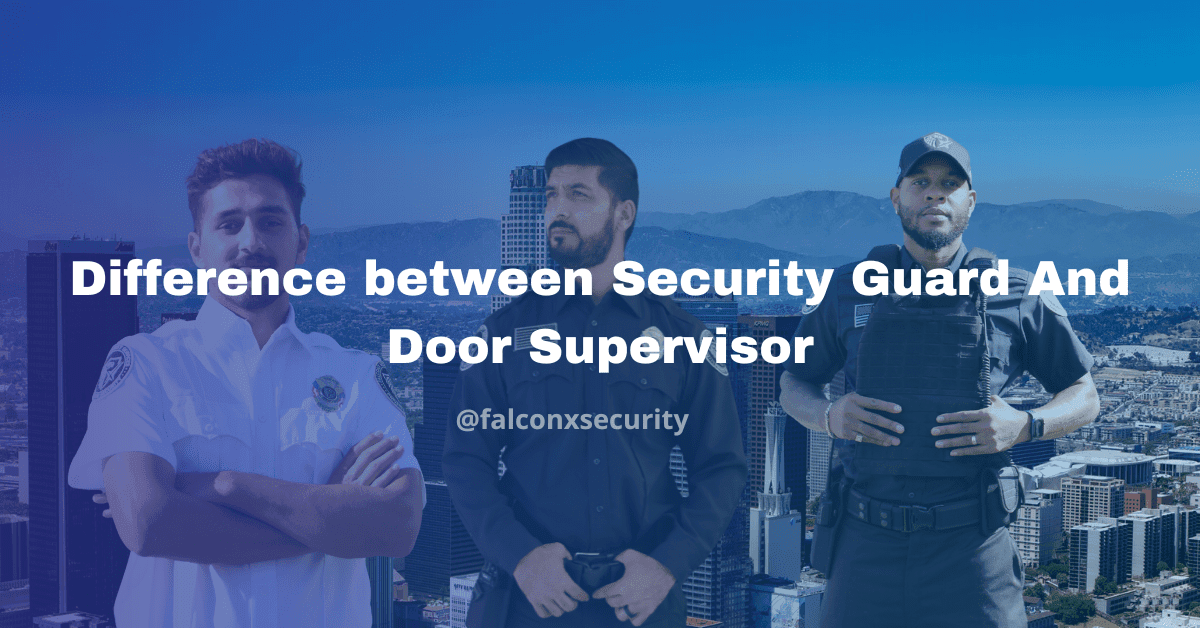
Difference between Security Guard And Door Supervisor

A security guard is responsible for protecting property, while a door supervisor manages access and behavior. Security guards focus on property protection, whereas door supervisors manage access and behavior.

Security guards typically work in various settings, such as retail stores, offices, or events, to prevent theft and vandalism. On the other hand, door supervisors are commonly found at bars, clubs, and events to ensure only authorized individuals enter and to maintain order among patrons.

Both roles require strong communication skills, quick decision-making abilities, and the ability to handle challenging situations effectively. Understanding the key differences between security guards and door supervisors is crucial for businesses to deploy the right personnel for their specific security needs.

Roles And Responsibilities

When it comes to ensuring safety and security in various establishments, two common roles that often come to mind are security guards and door supervisors. While these positions may seem similar, they actually have distinct roles and responsibilities. Understanding these differences can help businesses determine which role is best suited for their needs. In this article, we will explore the key duties and tasks of security guards and door supervisors.

Security Guard Duties

Security guards play a crucial role in maintaining a safe and secure environment for individuals and property. Their primary responsibility is to protect against theft, vandalism, and other criminal activities. Here are some key duties performed by security guards:

  • Patrolling designated areas to deter potential threats and suspicious activities.
  • Monitoring surveillance systems, including CCTV cameras, to detect any security breaches.
  • Controlling access to restricted areas and ensuring only authorized personnel enter.
  • Responding to alarms and investigating any disturbances or incidents.
  • Providing assistance and guidance to visitors and employees in emergency situations.
  • Preparing detailed reports on incidents, accidents, and any security-related issues.

Door Supervisor Tasks

Door supervisors, on the other hand, are primarily responsible for maintaining order and safety in venues with public access, such as bars, nightclubs, and entertainment venues. Their role goes beyond traditional security duties and includes specific tasks related to crowd control and customer service. Here are some key tasks performed by door supervisors:

  • Checking the identification of individuals entering the premises to ensure they meet the age requirements or dress code.
  • Monitoring the behavior and conduct of customers to prevent disturbances or violence.
  • Managing queues and controlling the flow of people entering and exiting the venue.
  • Intervening in conflicts or altercations and diffusing tense situations to maintain a safe environment.
  • Providing excellent customer service by assisting with queries, offering directions, or addressing concerns.
  • Cooperating with other staff members, such as bartenders or event organizers, to ensure smooth operations.

While security guards and door supervisors both play vital roles in maintaining safety, their specific duties and tasks differ based on the nature of the establishment they work in. Understanding these differences can help businesses make informed decisions when it comes to hiring the right professionals for their security needs.

Training And Qualifications

When it comes to the roles of security guard and door supervisor, training and qualifications play a crucial part in determining the differences between the two positions. Let’s delve into the specific training and qualifications required for security guards and door supervisors.

Security Guard Training

Security guard training is focused on providing individuals with the skills and knowledge necessary to safeguard people and property in various settings such as retail stores, office buildings, and events.

  • Basic first aid training is essential for security guards to handle medical emergencies effectively.
  • Understanding of crowd control techniques and conflict management is an integral part of security guard training.
  • Training in surveillance and monitoring systems to ensure the safety and security of the premises.

Door Supervisor Certification

Door supervisor certification is specifically designed to equip individuals with the skills required to maintain order and security in licensed premises such as bars, clubs, and entertainment venues.

  1. Door supervisors are trained in managing and diffusing confrontational situations to maintain a safe environment for patrons.
  2. Understanding the legal responsibilities and obligations related to alcohol licensing laws and regulations.
  3. Training in recognizing and dealing with suspicious behavior and potential security threats.

Difference between Security Guard And Door Supervisor

Work Environment

Security guards and door supervisors both work in the security industry, but their roles differ. Security guards are responsible for monitoring and patrolling properties, while door supervisors are primarily tasked with maintaining order and safety in bars, nightclubs, and other entertainment venues.

When it comes to security personnel, the work environment is a crucial factor that determines the job requirements and responsibilities. Security guards and door supervisors work in different settings and have distinct roles to perform. Understanding the difference between their work environment is essential to hire the right personnel for your business or event.

Security Guard Settings

Security guards are responsible for protecting people, property, and assets. They work in various settings, such as hospitals, schools, banks, and retail stores. Security guards are generally stationed at a fixed location, where they monitor the premises and ensure safety and security. They may also patrol the area on foot or in vehicles to deter potential threats. Security guards are trained to handle emergencies like fire, theft, or medical emergencies and take appropriate action to prevent any harm.

Door Supervisor Venues

Door supervisors, on the other hand, work in venues such as nightclubs, bars, and pubs. Their primary responsibility is to ensure the safety and security of the customers and staff. Door supervisors are responsible for checking the identification of customers, controlling the entry of people, and checking for prohibited items. They may also have to handle conflicts and deal with aggressive customers. Door supervisors must have excellent communication and conflict resolution skills to handle any situation calmly and efficiently. In conclusion, understanding the difference between security guards and door supervisors’ work environment is crucial to hire the right personnel for your business. While security guards work in fixed locations such as hospitals, schools, and banks, door supervisors work in venues such as nightclubs, bars, and pubs. Knowing these differences will help you choose the right personnel to ensure the safety and security of your business or event.

Skills And Attributes

When it comes to security roles, both security guards and door supervisors play crucial roles in maintaining safety and order. While they may appear similar at first glance, there are distinct differences between the two positions. One key aspect that sets them apart is the required skills and attributes. Let’s take a closer look at the essential skills for security guards and the key attributes of door supervisors.

Essential Skills For Security Guards

Security guards are responsible for protecting people, property, and assets. To effectively carry out their duties, security guards require a specific set of skills.

  1. Observation Skills: Security guards must have keen observation skills to identify potential threats or suspicious activities.
  2. Communication Skills: Clear and effective communication is vital for security guards to relay information and respond to incidents promptly.
  3. Physical Fitness: Being physically fit enables security guards to handle physically demanding situations and maintain a strong presence.
  4. Emergency Response: Security guards should be trained in emergency response procedures to handle crises and provide immediate assistance.
  5. Problem-Solving Abilities: Quick thinking and the ability to make sound decisions in high-pressure situations are crucial skills for security guards.

Key Attributes Of Door Supervisors

Door supervisors, on the other hand, have a more specialized role that focuses on controlling access to venues and ensuring the safety of patrons. Here are the key attributes that make door supervisors excel in their positions.

  • Physical Presence: Door supervisors need to have a strong physical presence to deter potential troublemakers and maintain order.
  • Conflict Management: The ability to defuse conflicts and handle difficult situations calmly is essential for door supervisors.
  • Customer Service: Door supervisors often interact with the public, so excellent customer service skills are necessary to provide a welcoming environment.
  • Knowledge of Licensing Laws: Door supervisors must be well-versed in licensing laws to ensure compliance and enforce venue regulations.
  • Adaptability: Door supervisors should be adaptable and capable of handling various scenarios that may arise during their shifts.

In conclusion, while security guards and door supervisors share some similarities in their roles, the required skills and attributes differ based on the specific responsibilities of each position. By understanding these distinctions, organizations can ensure they hire the right professionals for their security needs.

Difference between Security Guard And Door Supervisor

Legal And Regulatory Framework

In the legal and regulatory framework, the distinction between security guards and door supervisors is clear. Security guards mainly protect property, while door supervisors focus on managing entry and customer behavior in licensed premises. Understanding the specific roles and responsibilities under the legal framework is essential for effective security operations.

Laws Affecting Security Guards

Security guards must adhere to laws such as The Private Security Industry Act 2001.

They are responsible for maintaining security at various locations.

Security guards ensure the safety of people and property.

Regulations For Door Supervisors

Door supervisors are governed by specific regulations set by the Security Industry Authority (SIA).

They oversee security at venues like bars and clubs.

Door supervisors manage crowd control and maintain order.

Career Pathways

Security guards and door supervisors may seem similar, but there are key differences. Security guards focus on protecting property and assets, while door supervisors handle crowd control and customer safety. Understanding these distinctions can help you choose the right career path in the security industry.

When it comes to the security industry, two common job roles that often get mixed up are security guards and door supervisors. While both job roles involve maintaining safety and security, there are notable differences between the two. One of the key differences is in their career pathways. In this blog post, we’ll explore the career advancement opportunities for security guards and door supervisors.

Advancement For Security Guards

As a security guard, there are various opportunities for career advancement. Here are some of the possible pathways:

  • Supervisor: Security guards who demonstrate exceptional leadership skills and a strong work ethic can be promoted to a supervisor position. In this role, they will be responsible for managing and training a team of security guards.
  • Specialization: Security guards can choose to specialize in certain areas of security, such as event security, retail security, or mobile patrol security. This can lead to better pay and more job opportunities.
  • Law enforcement: Some security guards may choose to pursue a career in law enforcement. With the right training and experience, they may be able to become police officers or detectives.

Career Progression For Door Supervisors

Door supervisors have a more defined career pathway than security guards. Here are the typical steps in a door supervisor’s career progression:

Level Responsibilities
Level 2 Door supervisor
Level 3 Security manager, events manager, or head door supervisor
Level 4 Security consultant or operations manager

At each level, a door supervisor will need to complete additional training and gain more experience. By reaching level 4, a door supervisor can become a security consultant, which is a highly-respected position in the security industry. In conclusion, while there are similarities between security guards and door supervisors, their career pathways differ. Security guards have more flexibility in terms of career advancement, while door supervisors have a more structured career progression. Ultimately, it’s up to the individual to decide which path they want to take based on their interests, skills, and goals.

Safety And Risk Management

Safety and risk management are crucial aspects of the roles of security guards and door supervisors. Understanding the differences in how they approach safety and risk management is essential for businesses and organizations to make informed decisions about the security needs of their premises.

Difference between Security Guard And Door Supervisor

Risk Assessment For Security Guard

Security guards conduct thorough risk assessments to identify potential security threats and vulnerabilities within a given area. They evaluate the likelihood of security incidents such as theft, vandalism, or unauthorized access. These assessments help security guards develop strategies to mitigate risks and enhance the overall security of the premises.

Safety Protocols For Door Supervisors

Door supervisors focus on implementing and enforcing specific safety protocols to maintain order and ensure the safety of individuals within the premises. They are responsible for managing crowd control, responding to incidents, and preventing potential safety hazards. Door supervisors play a critical role in maintaining a safe and secure environment for patrons and staff.

Public Interaction And Communication

When it comes to security personnel, the roles of security guards and door supervisors may seem similar at first glance. However, there are distinct differences between the two in terms of their responsibilities and interactions with the public. One crucial aspect where their roles diverge is in public interaction and communication.

Engaging With The Public: Security Guards

Security guards are responsible for maintaining a secure environment and ensuring the safety of people and property within a specific area. When engaging with the public, security guards typically focus on maintaining a visible presence to deter potential security threats. They may also perform routine patrols, monitor surveillance equipment, and respond to incidents as needed. While interaction with the public is part of their role, their primary focus is on security and protection.

Communication Strategies: Door Supervisors

Door supervisors, on the other hand, are primarily employed to manage the entry and exit points of venues such as bars, clubs, and events. Their role involves screening individuals, checking identification, and ensuring the safety and security of patrons within the establishment. Their communication strategies are centered around managing crowds and de-escalating potential conflicts through effective communication and interpersonal skills.

Frequently Asked Questions

What Is The Difference Between A Security Guard And A Security Supervisor?

A security guard is responsible for monitoring and patrolling a specific area to prevent theft, damage, or other illegal activities. A security supervisor, on the other hand, is in charge of overseeing a team of security guards and ensuring that they are performing their duties efficiently and effectively.

What Is Higher Than A Security Guard?

A security supervisor is higher than a security guard. They oversee and manage the guards, ensuring safety protocols are followed.

What Is The Role Of A Security Door Supervisor?

A security door supervisor is responsible for monitoring and controlling access to a premises, ensuring the safety and security of the people inside. They handle crowd control, ID checks, and respond to any incidents or emergencies that may occur.

What Does A Security Supervisor Do?

A security supervisor oversees security operations, manages staff, implements safety protocols, and ensures a secure environment.

Conclusion

Understanding the distinction between a security guard and a door supervisor is crucial. While both roles are focused on maintaining safety, they have different responsibilities and skill sets. By knowing the differences, businesses can ensure they have the right personnel for the specific needs of their establishment, ultimately enhancing overall security measures.

Strengthening School Security: The Role of Security Guards in Preventing School Shootings

In recent years, the alarming trend of school shootings has gripped communities across the nation, leaving devastating consequences in its wake. As these tragic incidents continue to rise, there is an urgent call for bolstering security measures to safeguard students, faculty, and staff. Among the key strategies in fortifying school security is the deployment of trained security guards who play a pivotal role in preventing and responding to potential threats. In this blog, we delve into the importance of security guards in mitigating the risk of school shootings and explore the proactive measures they can take to enhance safety within educational institutions.

The Escalating Threat of School Shootings:

The frequency of school shootings has surged in recent years, underscoring the critical need for robust security protocols within educational environments. These harrowing incidents not only result in loss of lives but also inflict lasting trauma on survivors and communities at large. From Columbine to Sandy Hook to Parkland, each tragic event serves as a stark reminder of the vulnerabilities inherent in our schools and the imperative for proactive intervention.

The Role of Security Guards:

Security guards serve as frontline defenders against potential threats, acting as a visible deterrent to would-be assailants and providing a rapid response to security breaches. Their presence alone can instill a sense of security and reassure students, faculty, and parents of a safe learning environment. Beyond their deterrent effect, security guards are trained to identify and neutralize potential threats before they escalate into violence.

Preventive Measures:

Security guards are equipped with the expertise and training to implement a range of preventive measures aimed at thwarting potential school shootings. These proactive strategies include:

Risk Assessment and Surveillance: Security guards conduct thorough risk assessments to identify vulnerabilities and areas of concern within the school premises. Through vigilant surveillance and monitoring of school grounds, they can detect suspicious behavior or individuals who may pose a threat to safety.

Access Control: Implementing stringent access control measures is essential in preventing unauthorized individuals from entering school premises. Security guards stationed at entry points can verify the identity of visitors, screen for weapons or contraband, and enforce security protocols to maintain a secure perimeter.

Emergency Preparedness: Security guards undergo specialized training in emergency response procedures, enabling them to act swiftly and decisively in the event of a security threat. From coordinating lockdown procedures to facilitating evacuations, their preparedness and quick thinking can save lives during critical moments.

Collaboration with Law Enforcement: Security guards work in tandem with local law enforcement agencies to share intelligence, coordinate response efforts, and enhance overall security coordination. This collaborative approach ensures a unified response to potential threats and strengthens the overall security posture of educational institutions.

Community Engagement: Building strong partnerships with students, parents, faculty, and community stakeholders fosters a culture of vigilance and promotes shared responsibility for school safety. Security guards play a vital role in engaging with the school community, raising awareness about security protocols, and fostering trust and cooperation.

As the threat of school shootings persists, the need for comprehensive security measures has never been more pressing. Security guards play a central role in safeguarding schools and preventing potential acts of violence. Through their vigilance, training, and proactive interventions, security guards contribute to creating safer learning environments where students can thrive without fear. By investing in robust security infrastructure and prioritizing the role of security guards, we can take significant strides towards preventing future tragedies and ensuring the well-being of our youth.

The Vital Role of Professional Security Services in Today’s Environment

In today’s dynamic and ever-changing world, the need for professional security services has become more critical than ever before. From protecting businesses and properties to ensuring public safety and managing emerging threats, security services play a vital role in safeguarding individuals, assets, and communities. In this blog, we’ll explore the indispensable role of professional security services in today’s environment and the diverse range of services they offer to meet the evolving security needs of clients.

The Evolving Security Landscape:

The modern security landscape is characterized by a multitude of complex challenges, including cybersecurity threats, physical security risks, terrorism, and public safety concerns. Rapid technological advancements, global connectivity, and socioeconomic factors have contributed to the complexity of security threats, necessitating proactive and adaptive security measures to mitigate risks effectively.

Professional security services are at the forefront of addressing these challenges, employing a wide range of expertise, resources, and technology to provide comprehensive security solutions tailored to the unique needs of clients across various industries and sectors.

Key Functions of Professional Security Services:

Physical Security: Professional security services offer physical security measures to protect assets, properties, and individuals from unauthorized access, theft, vandalism, and other threats. Trained security personnel conduct patrols, monitor surveillance systems, and implement access control measures to maintain a secure environment.

Event Security: Events, ranging from concerts and festivals to corporate gatherings and sports matches, require specialized security services to ensure the safety and well-being of attendees. Professional security teams provide crowd management, access control, emergency response, and risk assessment to mitigate security risks and enhance the overall experience for event participants.

Executive Protection: High-profile individuals, executives, and dignitaries require specialized protection services to mitigate personal security risks and safeguard against potential threats. Professional security teams provide close protection, threat assessments, and security planning to ensure the safety and security of VIP clients in various environments.

Emergency Response: Professional security services play a crucial role in emergency response and crisis management, providing rapid response capabilities, evacuation assistance, and coordination with emergency services during critical incidents such as natural disasters, terrorist attacks, or workplace emergencies.

The Importance of Professionalism and Training:

Professional security services prioritize professionalism, integrity, and training to deliver high-quality security solutions that meet the highest standards of excellence. Security personnel undergo rigorous training programs covering a wide range of topics, including conflict resolution, emergency response, first aid, and customer service, to ensure they are well-prepared to handle diverse security challenges effectively.

In today’s increasingly complex and interconnected world, professional security services are indispensable for safeguarding individuals, assets, and communities against evolving security threats. By offering a diverse range of services, employing advanced technology, and prioritizing professionalism and training, professional security services play a vital role in maintaining safety, security, and peace of mind in today’s environment. As security threats continue to evolve, the importance of professional security services will only continue to grow, ensuring a safer and more secure future for all.

Addressing Homelessness: How Security Guard Services Can Help Protect Vacant Properties

Homelessness is a complex issue affecting communities worldwide, with individuals facing various challenges, including lack of shelter and resources. Vacant properties and buildings often become targets for homeless individuals seeking shelter, leading to potential damage, vandalism, and safety concerns for both property owners and the homeless population. In this blog, we’ll explore the role of security guard services in addressing homelessness and protecting vacant properties from damage and unauthorized entry.

The Challenge of Homelessness:

Homelessness remains a pressing social issue in many cities, with individuals facing economic hardships, mental health issues, and substance abuse problems. The lack of affordable housing and support services worsens the problem, leaving many individuals living on the streets or seeking refuge in abandoned buildings and properties.

Protecting Vacant Properties:

Vacant properties, such as abandoned houses, commercial buildings, and construction sites, are vulnerable to trespassing, vandalism, and illegal occupation by homeless individuals. Property owners face significant risks, including property damage, liability issues, and decreased property value. To address these challenges, security guard services play a crucial role in protecting vacant properties and preventing unauthorized entry.

Preventive Measures by Security Guard Services:

Security guard companies implement various preventive measures to protect vacant properties from intrusion by homeless individuals and mitigate potential risks. Some of these measures include:

  1. Regular Patrols: Security guards conduct routine patrols of vacant properties to deter trespassing and unauthorized entry. By maintaining a visible presence, guards discourage homeless individuals from seeking shelter in the property.
  2. Access Control: Security guards implement access control measures, such as securing entry points and installing fencing or barricades, to prevent unauthorized individuals from entering vacant properties. Controlled access helps reduce the risk of property damage and vandalism.
  3. Surveillance Systems: Security guard companies utilize surveillance technology, including CCTV cameras and motion sensors, to monitor vacant properties remotely. Surveillance systems provide real-time monitoring and alerts, allowing guards to respond promptly to any suspicious activity or unauthorized entry.
  4. Alarm Response: Security guards are trained to respond swiftly to alarms and security breaches at vacant properties. In the event of an intrusion or emergency, guards take immediate action to assess the situation, secure the premises, and notify law enforcement or property owners as necessary.
  5. Collaboration with Authorities: Security guard services collaborate with local law enforcement agencies and community organizations to address homelessness and property-related issues effectively. By working together, security companies and authorities can develop comprehensive strategies to protect vacant properties and support homeless individuals with access to resources and assistance.

Homelessness poses significant challenges for individuals and communities, impacting public safety, property security, and social welfare. Security guard services play a vital role in addressing homelessness-related issues by protecting vacant properties from damage and unauthorized entry. Through preventive measures, regular patrols, access control, surveillance systems, and collaboration with authorities, security companies help mitigate risks and safeguard properties while supporting efforts to address homelessness with compassion and empathy. By working together, stakeholders can create safer, more secure communities for everyone.

Emerging Trends in Security Guard Technology: What You Need to Know

In an era marked by rapid technological advancements, the realm of security guard technology is undergoing a transformative evolution. Traditional security measures are being augmented and, in some cases, replaced by cutting-edge solutions that promise enhanced efficiency, effectiveness, and adaptability. As businesses and individuals strive to stay ahead of potential threats, understanding the emerging trends in security guard technology becomes crucial. This article explores key developments shaping the future of security, offering insights into what you need to know to navigate this dynamic landscape.

One of the foremost trends revolutionizing security guard technology is the integration of artificial intelligence (AI) and machine learning. These technologies empower security systems to analyze vast amounts of data in real-time, identifying patterns and anomalies that may escape human observation. AI-driven surveillance cameras, for example, can differentiate between routine activities and suspicious behavior, triggering immediate alerts to security personnel. Machine learning algorithms continually improve their accuracy over time, adapting to evolving security challenges and reducing false positives.

The rise of the Internet of Things (IoT) has also made a significant impact on security technology. IoT-enabled devices, such as smart sensors and interconnected surveillance systems, create a network of information-sharing that enhances situational awareness. Security guards can access real-time data from various sources, enabling them to respond promptly to incidents and make informed decisions. IoT integration not only improves response times but also facilitates a more comprehensive understanding of the security landscape.

Biometric authentication has become an increasingly prevalent trend in access control and identity verification. Fingerprint recognition, facial recognition, and iris scanning are among the biometric technologies being deployed to strengthen security measures. Unlike traditional key cards or passwords, biometrics offer a higher level of accuracy and are less susceptible to unauthorized access. These systems not only bolster physical security but also streamline access management, reducing the risk of identity theft and ensuring that only authorized individuals can enter secure areas.

Robotic technologies are also making their mark in the security industry. Security robots equipped with cameras, sensors, and communication devices can patrol designated areas autonomously, providing an additional layer of surveillance. These robots can navigate complex environments, detect unusual activities, and communicate with human operators as needed. While not intended to replace human security guards, these robotic assistants complement human efforts, allowing personnel to focus on tasks that require a more nuanced understanding of security situations.

Virtual reality (VR) and augmented reality (AR) are emerging as valuable tools in security training and simulation. VR environments can replicate realistic scenarios, allowing security personnel to undergo immersive training exercises without exposing them to actual risks. AR, on the other hand, overlays digital information onto the physical world, providing real-time data and guidance during security operations. These technologies enhance training programs, ensuring that security guards are well-prepared for diverse and challenging situations.

Blockchain technology is gaining traction for its potential to enhance the integrity and transparency of security systems. In the context of access control and data protection, blockchain can be employed to secure sensitive information, track access history, and prevent tampering. The decentralized nature of blockchain makes it resistant to hacking and unauthorized alterations, instilling greater trust in the security measures implemented.

As security guard technology continues to evolve, the role of human personnel remains paramount. Technology serves as an enabler, augmenting the capabilities of security guards and providing them with advanced tools to perform their duties more effectively. However, the human element contributes essential qualities such as judgment, empathy, and adaptability, which are critical in complex and dynamic security situations.

In conclusion, staying informed about the emerging trends in security guard technology is essential for businesses and individuals seeking to fortify their security measures. The integration of AI, IoT, biometrics, robotics, VR, AR, and blockchain is reshaping the landscape of security, offering innovative solutions to address evolving threats. As these technologies continue to mature, the synergy between advanced tools and human expertise will likely define the future of security, ensuring a safer and more secure environment for all.

Understanding the Roles and Boundaries of Security Guards in California

In an era marked by heightened security concerns, the demand for security guard services is on the rise. To ensure professionalism and adherence to legal standards, every state in the United States, including California, has established laws governing the rights and responsibilities of security guards. In this comprehensive guide, we delve into what security guards can and cannot do in California.

Roles and Privileges:

Security guards in California are endowed with certain rights and privileges under the law, often extending beyond those of regular civilians. It’s imperative to recognize these privileges, as they play a significant role in shaping the duties of security personnel. Additionally, security companies may assign specific tasks to their guards, further defining their responsibilities.

Tasks Security Guards Can Perform:

  1. Protect People and Property from Harm: Ensuring the safety of individuals and safeguarding property from threats and dangers constitutes a primary duty of security guards. They are tasked with preventing theft and ensuring the physical security of their assigned premises. This includes conducting regular patrols, monitoring surveillance systems, and responding promptly to any security breaches.
  2. Observe and Report Suspicious Activity: Through vigilant patrols and surveillance, security guards monitor their surroundings for any irregularities or suspicious behavior. Prompt reporting of such activities to designated authorities aids in preventing potential security breaches. By maintaining a keen eye on their surroundings, security guards contribute to early detection and mitigation of security threats.
  3. Detain Individuals if Necessary: In instances where criminal activity is suspected, security guards possess the authority to apprehend suspects and detain them temporarily. However, their role is limited to facilitating the initial apprehension, and further action is left to law enforcement agencies. Guards may detain individuals to prevent imminent harm or to secure the scene until law enforcement arrives.
  4. Request Identification on Private Property: Guards stationed at access points have the right to verify the identity of individuals seeking entry to private property. This measure helps maintain security by ensuring that only authorized personnel gain access. By verifying identification, security guards mitigate the risk of unauthorized entry and enhance overall premises security.
  5. Use Physical Force When Necessary: Security guards are permitted to use physical force, within reasonable limits, to protect individuals or property from harm. However, the use of force must be proportionate to the threat faced, and guards must exercise restraint to avoid excessive force. Physical intervention may be necessary to restrain individuals engaged in violent behavior or to prevent imminent harm to others.

Limitations and Prohibitions:

Despite their authority, security guards in California are subject to certain restrictions to ensure adherence to legal and ethical standards. Understanding these limitations is crucial to preventing misuse of authority and potential legal repercussions.

Tasks Security Guards Cannot Perform:

  1. Arrest Individuals: While guards may detain suspects briefly, they lack the authority to make formal arrests. Only law enforcement officers have the power to arrest and detain individuals for criminal offenses. Guards must refrain from attempting to apprehend suspects beyond the scope of their authority.
  2. Use Excessive Force: Security guards must exercise restraint when using physical force and avoid inflicting unnecessary harm. Excessive force is prohibited and may result in legal consequences. Guards should prioritize de-escalation techniques and only resort to physical intervention when absolutely necessary to protect life or property.
  3. Act as Law Enforcement Officers: Guards are not authorized to perform law enforcement duties, such as conducting investigations or making arrests. They must refrain from assuming the role of police officers and adhere to their designated responsibilities. Guards should focus on maintaining a visible presence, deterring criminal activity, and assisting law enforcement when necessary.
  4. Carry Firearms With Proper Training and Certification: In cases where firearms are necessary for security purposes, guards must undergo requisite training and possess valid certifications. Carrying firearms without proper authorization is unlawful and can lead to legal ramifications. Guards must adhere to strict firearm regulations and only carry firearms when authorized and trained to do so.
  5. Avoid Racial Profiling and Discrimination: Guards must uphold principles of equality and refrain from discriminating against individuals based on race, ethnicity, religion, or other attributes. Racial profiling and discrimination are strictly prohibited and undermine the integrity of security operations. Guards should treat all individuals with respect and fairness, regardless of demographic characteristics.

Security guards play a pivotal role in maintaining safety and security across various settings. By adhering to legal guidelines and ethical standards, guards can effectively fulfill their duties while upholding the rights and dignity of individuals. Understanding the roles, privileges, and limitations of security guards in California is essential for promoting professionalism and ensuring public trust in security services. By upholding these standards, security guards contribute to safer communities and enhanced security for all.

How to Choose the Best Security Guard Services Company

In the bustling state of California, where innovation meets diversity, ensuring the safety and security of businesses, communities, and events is necessary. With numerous security guard services companies competing for attention, selecting the best one can seem a difficult task. However, armed with the right knowledge and considerations, you can confidently choose a security partner that meets your unique needs. This blog will guide you in selecting the best security guard services company, with a focus on FalconX Security Services as a prime example of excellence in California.

Factors to Consider Before Selecting a Security Guard Company

Before entrusting the safety of your property and assets to a security guard company, it is essential to consider several key factors. From understanding your specific security needs to evaluating the company’s reputation, experience, and technology, making an informed decision is crucial. There are some key factors that individuals need to consider to ensure they choose a partner that meets their security requirements effectively and reliably.

Understand Your Security Needs: Before starting your journey for the ideal security guard services company, you need to first identify your security requirements. Are you safeguarding a corporate office, a residential complex, or a special event? Identifying your specific security concerns will help narrow down your options and ensure you choose a company equipped to address your unique needs.

Research and Reputation: Conduct thorough research on potential security guard services companies. Look for reviews, testimonials, and case studies to measure their reputation and track record. FalconX Security Services, with a strong reputation and proven expertise in providing top-notch security solutions across California, stands out as a trusted industry leader.

Experience and Expertise: Experience matters when it comes to security. Look for a company with extensive experience in the field, particularly in the California region. We boast years of experience and a team of seasoned professionals who are well-trained in the unique security challenges faced by Californian businesses and communities.

Training and Certification: A reputable security guard services company should invest in rigorous training and certification programs for its personnel. Ensure that the guards provided by the company are properly trained, licensed, and equipped to handle various security scenarios. We prioritize the ongoing training and certification of our guards, ensuring they are prepared to handle any security situation with professionalism and expertise.

Technology and Innovation: In today’s digital age, technology plays a crucial role in enhancing security measures. Look for a security guard services company that leverages advanced technologies such as surveillance systems, access control, and real-time monitoring solutions. FalconX Security Services embraces cutting-edge technologies to provide comprehensive security solutions that are both effective and efficient.

Customized Security Solutions: Every client has unique security needs, and a one-size-fits-all approach may not work. Choose a security guard services company that offers customized security solutions tailored to your specific requirements. Our security guards take a personalized approach to security and our security support team works closely with clients to develop tailored strategies that address their individual concerns and priorities.

Transparency and Communication: Effective communication and transparency are essential in establishing a successful partnership with a security guard services company. Ensure that the company maintains open lines of communication and provides regular updates on security operations and incidents. We prioritize transparency and communication, keeping clients informed every step of the way and building trust and confidence in our security services.

Cost-Effectiveness: While cost is an important factor to consider, it should not be the sole determining factor when choosing a security guard services company. Instead, focus on the value and quality of the services provided. We offer competitive pricing for our premium security solutions, ensuring that clients receive maximum value for their investment.

Conclusion

Selecting the best security guard services company in California requires careful consideration of various factors, including expertise, experience, technology, customization, and communication. FalconX Security Services emerges as a standout choice, with its proven track record, commitment to excellence, and dedication to safeguarding businesses, communities, and events across the state. By partnering with us, you can rest assured that your security needs are in capable hands, allowing you to focus on what matters most – peace of mind and prosperity in the Golden State.

Implementing Access Control Systems at Construction Sites


Construction sites can be very dangerous places. Many people work there, and many machines are used. It is important to keep everyone safe. One way to do this is by using access control systems.

What Are Access Control Systems?

Access control systems are tools that help control who can enter a place. They are like guards at the gate. These systems ensure that only people who should be there can get in. This keeps the site safe.

Why Are They Important at Construction Sites?

Construction sites have many hazards. There are heavy machines, deep holes, and high places. Only trained workers should be there. Access control systems help keep out people who might get hurt. They also keep out thieves and vandals.

Types of Access Control Systems

There are many types of access control systems. Some are very simple. Others are very complex. Here are a few:

  • Keypads: These require a code to enter. Only people with the code can get in.
  • Card Readers: These use special cards. Workers swipe their card to enter.
  • Biometric Systems: These use fingerprints or eye scans. They are very secure.
  • Mobile Access: Workers use their phones to gain entry. This is very modern.

Steps to Implement Access Control Systems

Implementing access control systems takes planning. Here are the steps to follow:

Step 1: Assess The Site

First, look at the site. Find out where people enter and exit. Note any special areas that need extra security.

Step 2: Choose The Right System

Next, choose the best system. Consider the size of the site. Think about the number of workers. Pick a system that fits your needs.

Step 3: Install The System

Now, install the system. Place keypads, card readers, or scanners at all entrances. Make sure they work properly.

Step 4: Train The Workers

Teach the workers how to use the system. Show them how to enter codes or swipe cards. Make sure they understand the rules.

Step 5: Monitor The System

Keep an eye on the system. Make sure it is working well. Fix any problems right away. Update the system as needed.


Benefits of Using Access Control Systems

Using access control systems has many benefits. Here are a few:

Benefit Description
Increased Safety Only trained workers can enter. This reduces accidents.
Reduced Theft Thieves cannot get in. This protects tools and materials.
Better Record Keeping You know who is on site. This helps with payroll and attendance.
Improved Security Vandals and trespassers are kept out. This keeps the site safe.

Challenges in Implementing Access Control Systems

There can be challenges in using access control systems. Here are some common ones:

  • Cost: Some systems can be expensive. It is important to budget for this.
  • Training: Workers need to learn how to use the system. This takes time.
  • Maintenance: The system needs regular checks. This ensures it works well.
  • Technical Issues: Sometimes, systems can fail. Have a backup plan in place.
 

Frequently Asked Questions

What Is An Access Control System?

An access control system regulates who can enter a site, ensuring only authorized personnel gain entry.

Why Use Access Control At Construction Sites?

To enhance security, prevent unauthorized access, and protect both workers and equipment on the site.

How Does Access Control Improve Safety?

It restricts access to hazardous areas, ensuring only trained personnel can enter, thereby reducing accidents.

What Are Common Types Of Access Control?

Common types include keycards, biometric systems, PIN codes, and mobile-based entry systems.

Conclusion

Access control systems are vital for construction sites. They help keep workers safe and secure. By following the steps, you can choose and install the right system. This ensures a safer work environment for everyone.

Do you have any questions about access control systems? Feel free to ask. We are here to help you make your construction site safer.

How to Create an Effective Construction Site Security Plan

Construction sites need good security. This keeps people, equipment, and materials safe. A good security plan helps stop theft and damage. Follow these steps to create a strong plan.

Why Construction Site Security Is Important

Construction sites are easy targets for thieves. They have expensive tools and equipment. Theft and vandalism cause delays and cost money. Good security saves time and money.

Steps to Create an Effective Security Plan

Follow these steps to make your site safe:

1. Assess The Site

First, look at your site. Check for weak spots. Know what you need to protect. Make a list of all equipment and materials.

2. Create A Site Layout

Draw a map of the site. Mark entry points, buildings, and storage areas. This helps plan security measures.

3. Install Good Lighting

Thieves avoid well-lit areas. Use bright lights around the site. Focus on entry points and storage areas.

4. Use Fencing

Fences keep people out. Use strong, tall fences. Add gates with locks. This makes it hard for thieves to enter.

5. Hire Security Guards

Guards watch the site day and night. They can stop theft and vandalism. Hire trained guards for the best results.

6. Install Security Cameras

Cameras record activity on the site. Place them in key areas. Use cameras with night vision for 24-hour coverage. This helps catch thieves.

7. Use Alarm Systems

Alarms alert you to break-ins. Use motion sensors and door alarms. Connect alarms to your phone or security company.

8. Keep A Visitor Log

Track who enters and leaves the site. Use a sign-in sheet or digital log. This helps identify suspects if theft occurs.

9. Store Equipment Safely

Lock up tools and materials. Use secure storage units. This makes theft harder.

10. Train Workers

Teach workers about security. They should know how to report suspicious activity. Encourage them to lock up tools and follow security rules.

Key Security Measures in Detail

Let’s dive deeper into some key security measures:

Lighting

  • Install lights at all entry points.
  • Use motion sensor lights.
  • Keep lights on at night.

Fencing

  • Use fences at least 8 feet tall.
  • Check fences regularly for damage.
  • Use barbed wire on top for extra security.

Security Guards

  • Hire guards from a reputable company.
  • Train guards on site-specific needs.
  • Use guards 24/7 for best results.

Security Cameras

  • Place cameras at all entry points.
  • Use high-resolution cameras for clear images.
  • Check camera footage regularly.

Alarm Systems

  • Install motion detectors around the site.
  • Use door and window alarms on buildings.
  • Connect alarms to your phone for instant alerts.

Visitor Log

  • Require all visitors to sign in and out.
  • Check IDs of visitors.
  • Review the log daily for unusual activity.

Safe Storage

  • Use lockable storage containers.
  • Store valuable items in secure buildings.
  • Label storage areas clearly.

Worker Training

  • Hold regular security meetings.
  • Teach workers how to spot suspicious activity.
  • Encourage workers to report issues immediately.

Benefits of a Good Security Plan

A good security plan has many benefits:

  • Reduces theft and vandalism.
  • Saves time and money.
  • Keeps workers and equipment safe.
  • Improves project timelines.
  • Increases trust with clients.
 

Frequently Asked Questions

What Is A Construction Site Security Plan?

A construction site security plan outlines measures to protect the site from theft, vandalism, and unauthorized access.

Why Is Site Security Important?

Site security prevents theft, reduces vandalism, and ensures the safety of workers and equipment.

How To Assess Site Vulnerabilities?

Conduct a thorough site survey to identify potential security weaknesses and areas needing improvement.

What Are Common Security Measures?

Security measures include fencing, surveillance cameras, lighting, and security personnel.

Conclusion

Creating a construction site security plan is essential. Follow the steps and tips in this guide. Your site will be safer and more efficient. Protect your investment with a solid security plan.